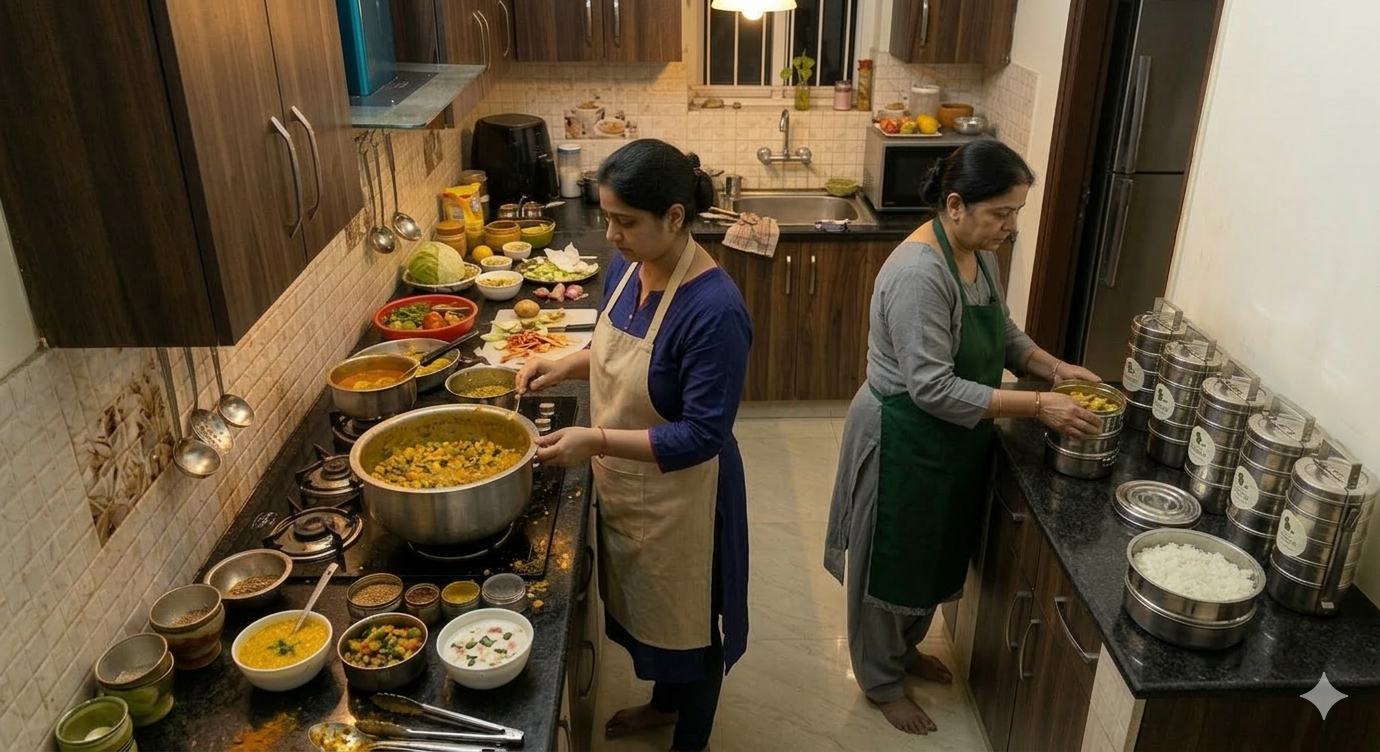
Chaturmas is a four-month period, roughly from Ashadhi Ekadashi to Kartik Purnima, observed by many Jains and Hindus with specific dietary restrictions. If you've been asked to cook or order for someone observing Chaturmas and aren't sure what that actually means for the menu, here's a practical rundown.
What Chaturmas Is
The word breaks down as chatur (four) and maas (months) — a period traditionally associated with monsoon, when many religious practitioners, especially in Jain tradition, take on stricter vows around food, travel and daily conduct. It's a period of increased discipline, not a single-day observance.
What's Typically Avoided
- Green leafy vegetables — often avoided due to increased insect presence during monsoon
- Certain vegetables considered harder to source cleanly during the season
- Onion and garlic — as with general Satvik and Jain practice
- Non-seasonal or out-of-season produce, in stricter observance
- In the strictest practice, some observe additional fasting days within the four months
What You Can Still Cook Well
Despite the restrictions, Chaturmas cooking isn't bland by necessity — grains, dals, seasonal Satvik vegetables, dairy and a wide range of spices (minus onion-garlic) still leave real room for varied, satisfying meals. The discipline is more about what's excluded than what's left tasting thin.
Why This Period Matters for Ayodhya Especially
Chaturmas is closely tied to pilgrimage and temple life, and Ayodhya sees a real uptick in visitors observing it seriously during this period. Food that respects the observance properly — not just "vegetarian," but genuinely within Chaturmas rules — matters more here than almost anywhere else.
Ordering Chaturmas-Appropriate Food
Rather than trying to modify a regular menu, SatvikMeals can plan a Chaturmas-specific menu on request, respecting seasonal and dietary restrictions properly rather than approximating them.
Ask About a Chaturmas Menu
Available in both Patna and Ayodhya — cooked to observe the period properly.
💬 Ask on WhatsApp